2024 Global Landscape of Solid-State Battery Technology
Publication Date: 2025-02-26
I. Increasing Energy Density via Solid-State Batteries: A Key Global Development Goal
As lithium-ion battery (hereinafter referred to as lithium battery) technology evolves, it is gradually moving toward high energy and high power. However, lithium battery systems inherently use flammable liquid organic electrolytes. In high-energy battery designs, safety considerations prevent the use of high-energy/high-voltage materials, resulting in a plateau for energy density. For currently commercialized Nickel Cobalt Manganese (NCM) and Lithium Iron Phosphate (LFP) technologies, gravimetric energy densities can reach 250~290 Wh/kg and 150~210 Wh/kg, respectively. However, during the charging and discharging process, energy and heat are generated. The organic solvents serving as the medium for lithium-ion transport begin to volatilize and generate gas when exposed to this heat. Further temperature increases can trigger thermal runaway. Balancing energy enhancement and safety has remained a significant challenge for manufacturers.
To address this, lithium battery development aims to replace liquid components with solid-state electrolytes. By reducing flammable materials, safety is significantly improved. Furthermore, high-energy/high-voltage cathode materials can be utilized, and anodes can employ higher-capacity silicon or lithium metal materials, potentially boosting overall energy density to 500~900 Wh/kg. This leap would dramatically enhance the performance of current products. Countries worldwide are providing resources and policies to accelerate this technology. For instance, the U.S. launched the "Battery 500" initiative, a major U.S. Department of Energy (USDOE) project aimed at developing lithium batteries with energy densities of 500 Wh/kg to improve EV range. Japan’s Ministry of Economy, Trade and Industry (METI) and NEDO have proposed corresponding solid-state battery roadmaps in collaboration with industry. The Chinese government established the "China All-Solid-State Battery Collaborative Innovation Platform" (CASIP) and invested approximately 6 billion RMB (about 845 million USD) to develop next-gen EV batteries. Europe has also included solid-state battery development in its Strategic Energy Technology Plan (EU SET Plan). Consequently, solid-state batteries remain a high-profile topic. This article further discusses technological progress, challenges, solutions, and market trends.
II. Technology Roadmaps for All-Solid-State Batteries
Solid-state electrolytes encompass various types and technical routes, including oxide, polymer, sulfide, hydroxide, halide, and composite electrolytes. Each has its own material system. While the first three are currently the most common, composite technology is emerging as a high-potential, fast-growing route. Detailed descriptions follow.
(1) Oxide-type Solid-State Batteries
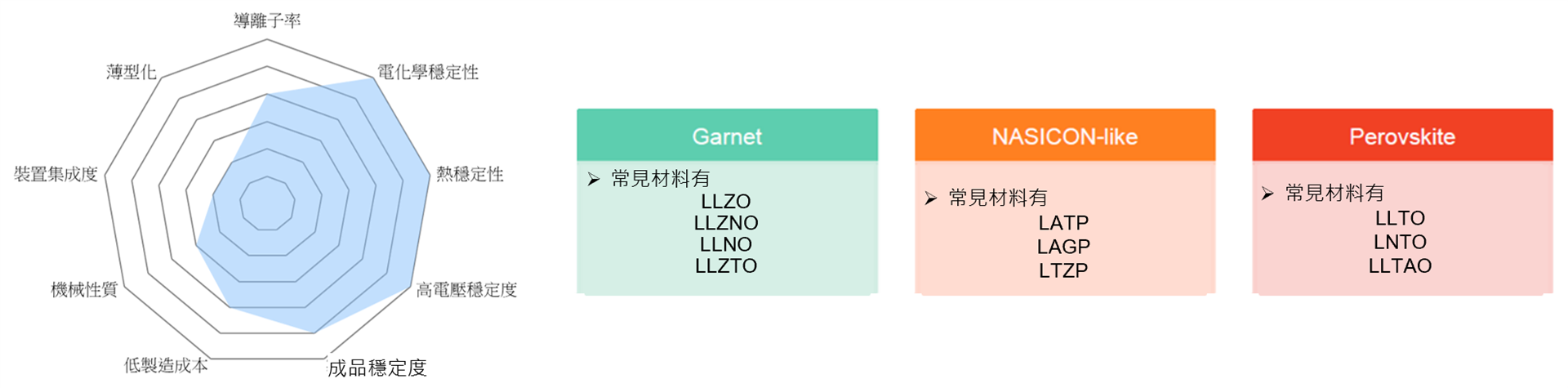
Oxide electrolytes are categorized into structures like Garnet, NASICON-like, and Perovskite. Garnet-type is a widely used system due to its high electrochemical stability and good ionic conductivity; it can also be doped with elements to improve sintering conditions and process efficiency. NASICON-like and Perovskite types offer good ionic conductivity but lower operational performance than Garnet, and exhibit poor stability when paired with lithium metal anodes. However, oxides are generally brittle, have high interfacial impedance, and require high sintering temperatures (high energy consumption). Today, these issues are addressed by forming composites with polymers to increase flexibility, adding conductive additives to boost conductivity, and creating SEI protective layers for lithium metal stability. Low-temperature synthesis materials are also being developed to reduce energy consumption. (See Figure 1)
Source: Compiled by ITRI IEK (2025/02)
Figure 1: Performance indicators and common materials for oxide solid-state batteries
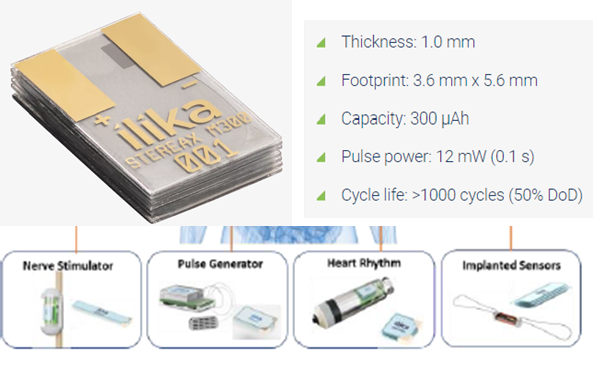
Currently, FDK (Japan) and Ilika (UK) have introduced oxide solid-state batteries into the small consumer electronics market. FDK’s small all-solid-state battery uses surface sintering to bond electrodes and electrolytes, measuring roughly 4mm x 2mm x 2mm for use in earphones and watches (Figure 2). Ilika’s versions also use sintering and pressure for tight interface bonding, primarily targeting medical monitoring devices and handheld vacuums (Figure 3).

Source: FDK Official Website (2024)
Figure 2: Performance and specifications of FDK oxide all-solid-state batteries
Source: Ilika Official Website (2024)
Figure 3: Performance and specifications of Ilika oxide all-solid-state batteries
(2) Polymer-type Solid-State Batteries
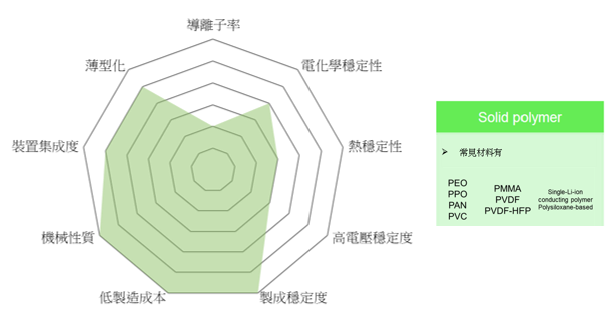
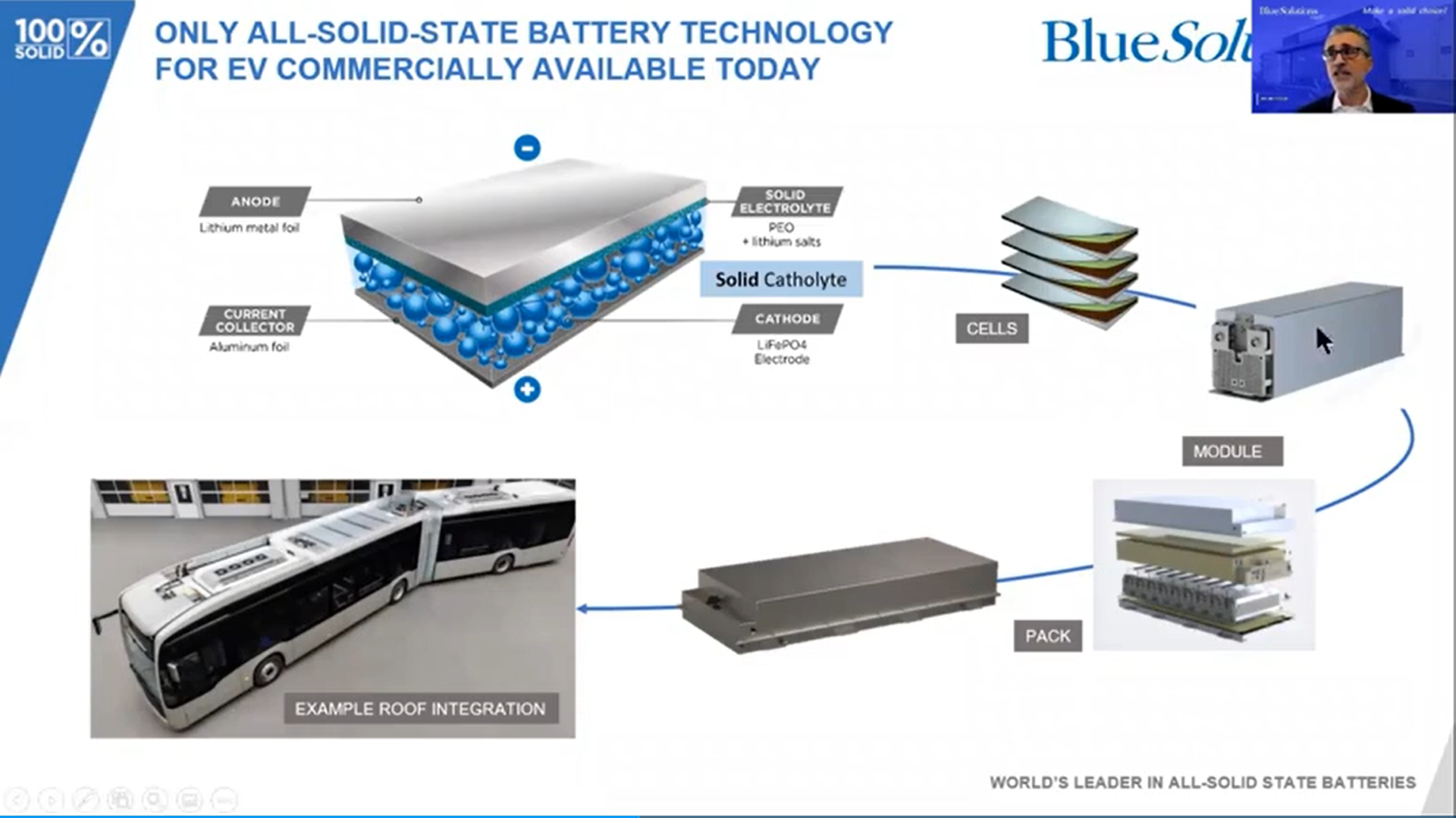
Polymer batteries use polymers to form conductive, ion-transporting films. They perform well at high temperatures. Common materials include PEO (polyethylene oxide) or its derivatives, as well as PPO, PAN, PMMA, and PVDF. Since these are industrial plastics with good ion transport/electron blocking properties, they often have lower current densities and require liquid additives or modification of monomers to improve efficiency. They are favored by companies seeking rapid development due to low cost, stability, and lower technical barriers (Figure 4). Most developers are European or American, such as Blue Solutions, which developed LFP-cathode polymer solid-state batteries deployed in Daimler electric buses since 2019 (Figure 5).
Source: Compiled by ITRI IEK (2025/02)
Figure 4: Performance indicators and common materials for polymer solid-state batteries
Source: Blue Solution Official Website (2024)
Figure 5: Blue Solution polymer solid-state batteries used in Daimler electric buses
(3) Sulfide-type Solid-State Batteries
Sulfide electrolytes contain sulfur-based materials and offer the best performance among the three routes due to high conductivity. However, they are sensitive to oxygen and moisture, generating toxic hydrogen sulfide (H₂S) gas if exposed. Thus, manufacturing requires oxygen-free, water-free environments, making it technically difficult and expensive. There are two main structures: LISICON-like (easy to produce, high conductivity but poor stability) and Argyrodite (excellent ion transport). Many vendors are investing in these (Figure 6).
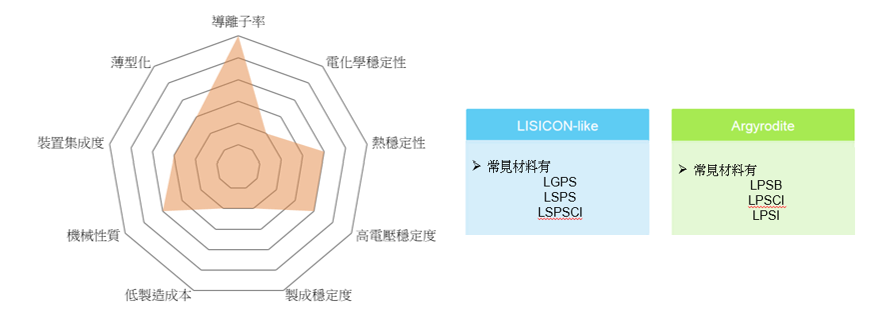
Source: Compiled by ITRI IEK (2025/02)
Figure 6: Performance indicators and common materials for sulfide solid-state batteries
Samsung SDI utilizes LiPSCl sulfide technology paired with lithium metal anodes, aiming for a volumetric energy density of 900 Wh/L (Figure 7). To mitigate side reactions, they use protective measures and coating technologies. Samsung SDI began building a pilot line in 2022 and provided samples for testing in 2024. They plan for mass production in 2026, starting with their own smartwatches, rings, and Bluetooth headsets.
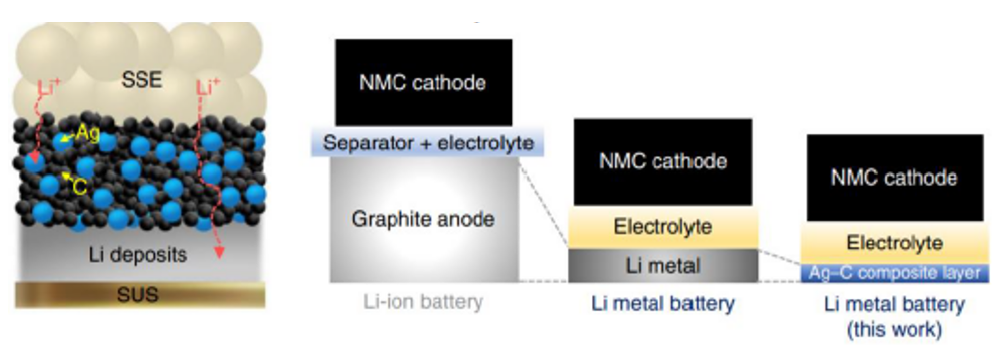
Source: ID TechEX report (2024)
Figure 7: Samsung SDI sulfide solid-state battery design concept
Toyota has also invested heavily in sulfide technology (specifically LPSI) for years. Recently, they partnered with Idemitsu Kosan for material development and showcased an EV battery module in 2024 (Figure 8). However, complexity has delayed Toyota’s timeline. Chief Scientist Gill Pratt noted that the initial strategy will shift from pure EVs to hybrids, as smaller battery requirements minimize price impacts. Full EV deployment will follow cost reductions. A next-gen solid-state battery is slated for 2026, targeting an 800km range and 20-minute fast charging.
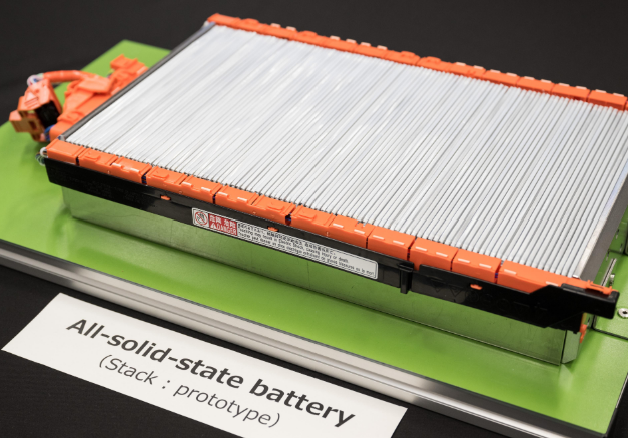
Source: Toyota Official Website (2024)
Figure 8: Toyota solid-state EV battery module design concept
(4) Other Types of Solid-State Batteries
- LIPON-type Solid-State Electrolytes
LIPON uses an oxide base with specific metals added to form a glass or ceramic state, improving cycle life, conductivity, and strength. While standard oxides are 200~500μm thick, LIPON can be thinned below 100μm. OHARA’s LICGCTM SP-01 is a glass-ceramic film with higher conductivity than oxides, water-insolubility, and atmospheric stability. It is being introduced for small electronics and consumer drones (Figure 9).
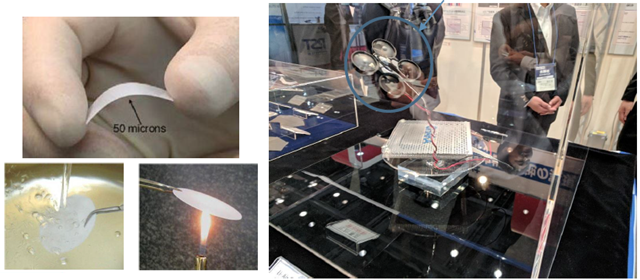
Source: OHARA Official Website (2024)
Figure 9: OHARA LICGCTM SP-01 solid-state battery sample and drone application
- Li-Hydride Solid-State Electrolytes
Li-Hydride electrolytes are limited by low room-temperature conductivity and are mostly used for high-temp aerospace or military applications. Large-scale manufacturing is difficult due to high-pressure hydrogen requirements. They remain in early research stages with no widespread commercialization yet.
- Li-Halide Solid-State Electrolytes
Li-Halide electrolytes offer high stability and non-flammability but suffer from low ionic conductivity and high costs, making them unsuitable for high-power EVs. Current applications are mostly in small medical devices like pacemakers and internal trackers.
- Composite Solid-State Electrolytes
Composite electrolytes combine technologies to offset individual weaknesses. For example, combining oxide and polymer electrolytes can compensate for the brittleness of oxides and the low conductivity of polymers. Many vendors are now shifting toward these hybrid developments.
III. Semi-Solid-State Battery Technology Development
To accelerate commercialization, several Chinese manufacturers have pivoted toward semi-solid-state technology. By adding liquid, they solve interface contact issues and boost ionic conductivity. While more stable than all-solid-state prototypes, the remaining liquid still poses a safety risk. Reducing liquid content is the primary goal. There are three main semi-solid routes: 1) Enhancing solid electrolytes and adding 10-15% liquid to fill gaps; 2) Mixing solid electrolyte particles with cathode materials (Catholyte) and adding 10% liquid; 3) "In-situ gelation," where electrolytes are dissolved in polymers and cured (via UV or heat) into a semi-solid mesh, reducing liquid content below 10%.
Since lithium-ion transport is most efficient in liquids, these systems risk electrolyte depletion during high-voltage or high-temp cycles, leading to rapid capacity fade. Controlling lithium dendrites with low liquid content also remains a challenge. Chinese companies like Ganfeng Lithium (partnering with Dongfeng and SERES), Farasis Energy (with Voyah), Qingtao (with Neta and IM Motors), and Weilan (with NIO) have already commercialized semi-solid batteries. NIO’s ES6 and ET7 have demonstrated a 1,000km range on a single charge. The ultimate goal remains reducing liquid content to 0%.
IV. Summary
As lithium-ion technology reaches its limits, solid-state batteries are viewed as the next breakthrough for energy density and safety. Existing NCM and LFP technologies (250~290 and 150~210 Wh/kg) still face thermal runaway risks. Replacing liquid with solid electrolytes could eliminate these risks while enabling high-nickel cathodes and lithium metal anodes, potentially reaching 500~900 Wh/kg.
Technically, each route has unique challenges. Oxides are stable but brittle and energy-intensive to make, yet they are appearing in small electronics. Polymers are low-cost but have weaker conductivity; they are currently used in European electric buses. Sulfides offer the best performance but require expensive, controlled manufacturing—favored by Samsung SDI and Toyota as long-term strategies. Semi-solid batteries serve as a bridge, currently seeing deployment in Chinese EVs with a roadmap toward 0% liquid content.
Future progress depends on solving interface stability and ionic conductivity issues. Selecting appropriate materials and ensuring compatibility will be key. With significant global investment, commercialization is expected to accelerate. Major industry players have already sent samples to automakers for verification, with mass production targets set for 2027–2028, likely reshaping the lithium battery market.
(The author is an Industry Analyst at ITRI’s Industrial Economics and Knowledge Center (IEK), executing the Industrial Technology Infrastructure Research and Knowledge Service Project.)
Source: https://www.moea.gov.tw/MNS/doit/industrytech/IndustryTech.aspx?menu_id=13545&it_id=578